
What is a useful December garden plan?
Choose a few places that matter to your household and name the decision needed in each. Perhaps the lawn is still covered with leaves, a border contains unidentified stems or the route to storage has become awkward. Describe those situations separately. A December plan should explain what is needed now and what remains a question, rather than grouping every outdoor task under a general winter tidy.
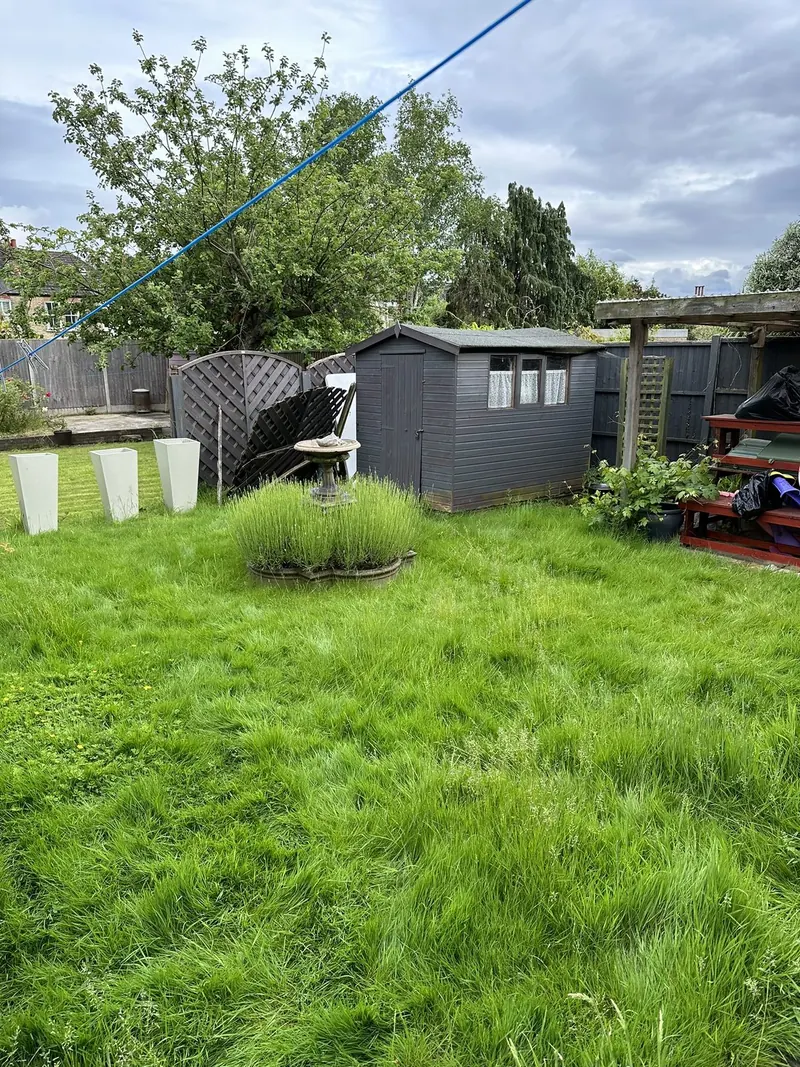
The RHS December lawn guidance recommends removing remaining leaves from grass and considers mowing during mild weather. Its flower guidance also presents leaving faded perennials until spring as an option. These different choices show why looking closely matters: the useful response is not necessarily to remove all visible plant material everywhere.
How can you finish leaf gathering as a defined job?
Name the section you intend to clear and the place where the material will finish. Keep the instruction limited enough that completion can be checked. If earlier work has already produced a pile, describe that pile separately from leaves still scattered across the lawn. This avoids confusion about which material is being handled in the current task.
Consider the carrying route as part of the plan. A collection point beside a narrow gate can obstruct later movement if it is chosen without thought. Explain shared access and any need to pass through rooms. For a visit carried out while you are away, provide a private contact route for questions. Keep sensitive entry information out of a general description. Good coordination means the physical task and the end position of the material are understood before somebody starts moving it.
What should you know before deciding to mow?
December does not create a blanket instruction to stop or continue cutting. The RHS lawn page for this month allows for growth in mild weather and advises against walking on frosty grass. Follow the source’s conditions rather than treating a booked date as proof that the surface is suitable.
If you need an assessment, describe recent work and the parts of the lawn you normally use. Mention whether there are bulbs or other areas you intentionally leave. A request to make the grass look neat should not be interpreted as permission to cut every planted patch within its outline. Keep the lawn’s boundaries and any retained sections clear in your instruction, particularly if the person coordinating the visit will not be there to point them out.
How do you decide what to retain in a border?
The RHS December flower advice describes the option of leaving faded herbaceous perennials until spring for insects. Decide where that approach fits your planting rather than assuming all standing stems need removal. If you are uncertain which plants you have, record the area for identification instead of giving an indiscriminate cutting instruction.
Make a simple private map showing retained groups and the areas you want discussed. Keep older photographs from the growing season if they explain the planting better than its current appearance. In a shared household, check that everyone involved is using the same map. The aim is to reduce conflicting instructions and make it possible to distinguish deliberate retention from work that has merely been overlooked.
Which decisions can be made without ordering materials?
Use the opportunity to measure storage access, review furniture positions and list the corners that are difficult to maintain. These are observations about your own use of the space. They do not require you to begin a landscaping project or buy planting supplies. A measured sketch can be kept until you are ready for a more detailed discussion.
Record one practical problem at a time. If a door opens awkwardly beside a bed, measure the turning space. If a route is repeatedly obstructed by portable items, try a different arrangement before proposing a permanent alteration. Keep construction and ordinary gardening as separate requests. This prevents an exploratory idea becoming an assumed part of a maintenance appointment before the preparation, materials and intended finish have been assessed.
How do you organise a December visit around household plans?
Tell the team about dates when access is restricted or the property is occupied differently. A preference entered in an enquiry is not a confirmed appointment. Explain which tasks are essential to your immediate use of the garden and which could be considered later. That gives the scheduling conversation a practical purpose without implying a promise about availability.
For a repeat visit, identify any change since the last appointment. This might be a new collection pile, furniture moved into the work area or a different person providing access. Keep the current written description with the quotation so the visit can be reviewed against what was actually discussed. If the planned task is unsuitable on arrival, ask how the decision will be handled instead of assuming the team should substitute unrelated work.
What belongs in the note you take into the new year?
Make three short lists: completed, deliberately retained and awaiting assessment. Add a place name within the garden to each entry so it remains understandable later. A note saying only garden unfinished tells the next person very little. A more useful record identifies a particular border, the reason it was left and the question that still needs answering.
Use the printable checklist to keep the next decisions visible, then consult the calendar overview when choosing another seasonal task. If the routine itself needs adjusting, the regular-care guide explains how to discuss that arrangement. The year ends usefully when your priorities are clearer, even where a particular task has been deferred rather than forced into a date that did not suit the garden.
Questions for this page
Is all standing border growth meant to be removed?
No. The RHS describes retaining some faded perennials until spring. Identify the plants and decide what is intentionally being left.
Does a mild day mean mowing is always suitable?
No. Use the source’s full condition guidance and the actual surface. A calendar month or a single weather observation is not enough by itself.
Should collection piles be included in the brief?
Yes. Describe existing material separately from vegetation to be cut or gathered during the appointment.
Can I prepare a plan before choosing improvements?
Yes. Measure access, record how the space is used and identify questions before deciding on permanent changes or buying materials.
What should I keep for the next visit?
Retain the task list, a note of deliberately untouched areas and the questions awaiting assessment, so the next conversation can begin with clear context.